

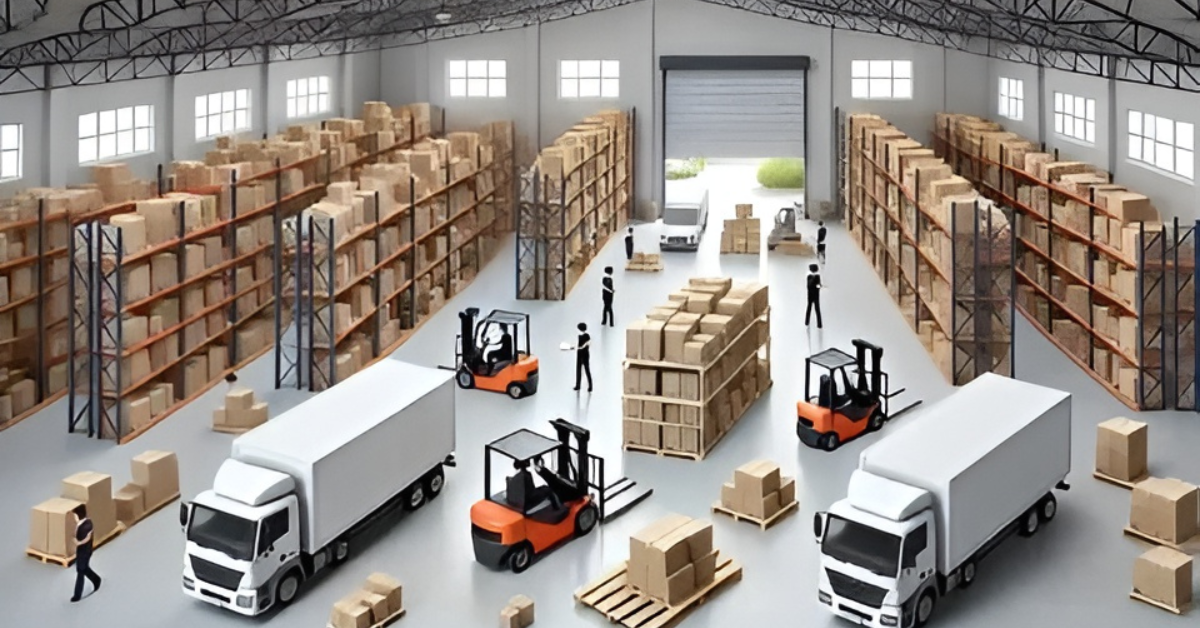
Running your own warehouse feels like control. You own the space. You manage the people. You decide how inventory moves. Here’s the thing. That model only works when volume is steady, and logistics stay simple. The moment demand shifts or shipping gets complicated, in-house storage starts working against you.
That’s when a third-party warehouse Vancouver businesses rely on becomes the practical choice. At Olympia Transportation, we see this transition all the time. Companies grow. Freight routes expand. Inventory turns faster. What once felt manageable becomes costly and restrictive.
Outsourcing warehousing is not about losing control. It’s about putting control where it actually matters.
When Your Space No Longer Fits Your Inventory
In-house warehouses struggle with change. Too much inventory means congestion. Too little means wasted space and fixed costs that never go away.
A third-party warehouse Vancouver solution adapts to real demand. Storage scales up when volumes rise and pulls back when they don’t. Businesses stop paying for space and start paying for what they actually use.
At Olympia Transportation, our warehousing supports inbound freight, outbound distribution, and short-term holding between transport stages. Inventory is positioned to move, not sit. That flexibility is hard to maintain inside a fixed facility.
When Shipping Stops Being Straightforward
The moment freight moves across regions or borders, storage and transportation can’t operate in silos.
This is where warehouse and trucking work together make the difference. When storage connects directly to transportation, delays shrink, and handoffs disappear. Containers arrive. Goods are stored. Trucks are scheduled. The flow stays intact.
Our warehouse and trucking services are built as one coordinated system. Full truckload, less-than-truckload, intermodal movement, and drayage all connect directly to our warehousing operations. That integration keeps freight moving without unnecessary handling or waiting.
When Labor and Overhead Take Over
Managing a warehouse is more than square footage. It’s staffing, training, equipment, safety standards, and daily supervision.
As volumes increase, those responsibilities multiply. Hiring becomes constant. Equipment upgrades become urgent. Management time gets pulled away from core business priorities.
A third-party warehouse Vancouver option shifts that operational burden to a logistics partner. At Olympia Transportation, we manage the facility, workflow, and coordination with transportation. Businesses regain time and predictability.
When Inventory Visibility Starts Slipping
Unclear inventory creates real problems. Missed shipments. Late deliveries. Frustrated customers.
Third-party warehousing improves visibility by aligning storage with transport schedules. Inventory is tracked, staged, and prepared based on when it needs to move.
By connecting the warehouse and trucking, we keep inventory status and shipment timing aligned. Goods are not just stored. They are positioned for their next move. That clarity reduces risk and improves performance.
When Growth Exposes Weak Infrastructure
Growth is exciting. It also exposes cracks fast.
An in-house warehouse built for last year’s volume rarely supports what comes next. Expanding space takes time. Hiring takes longer. Transport coordination becomes harder.
A third-party warehouse Vancouver partner provides infrastructure that grows with demand. Storage capacity adjusts. Transportation options expand. The system stays steady.
Olympia Transportation supports this growth by keeping logistics flexible but disciplined. Our warehousing and transport services absorb change without disrupting daily operations.
When Focus Matters More Than Ownership
Owning a warehouse can feel strategic. Often, it’s just distracting.
Outsourcing to a third-party warehouse Vancouver provider allows businesses to refocus on what they do best. Storage, handling, and transport become dependable processes instead of daily problems.
By integrating warehouse and trucking into one service, we reduce friction across the supply chain and help businesses operate with confidence.
Conclusion
In-house storage works until complexity sets in. When volumes fluctuate, transportation grows demanding, or costs climb, the model breaks down.
A third-party warehouse Vancouver solution delivers flexibility, visibility, and control that in-house operations struggle to match. When paired with integrated warehouse and trucking, supply chains move faster and break less often.
At Olympia Transportation, we use third-party warehouse Vancouver services and warehouse and trucking coordination to keep operations stable, scalable, and ready to move.
Also Read: Why Transloading in Shipping Is Essential at Major Hubs Like the Port of Vancouver.
FAQs
When should a business consider a third-party warehouse Vancouver option?
Businesses
should consider outsourcing when inventory fluctuates, space limits growth,
transportation complexity increases, or in-house costs rise faster than
operational efficiency and delivery performance can reasonably sustain.
How does a third-party warehouse in Vancouver improve logistics control?
It
centralizes storage, handling, and scheduling, allowing inventory to align with
transport timelines, reducing delays, minimizing handling errors, and improving
visibility across inbound, outbound, and transitional freight movements.
Why is combining warehouse and trucking important for growing companies?
When
warehouse and trucking operate together, freight transitions stay coordinated,
dwell time decreases, delivery schedules stabilize, and businesses avoid
communication gaps that often occur between separate storage and transport
providers.
Can a third-party warehouse in Vancouver scale with seasonal demand?
Yes,
outsourced warehousing adjusts storage capacity and labor based on volume
changes, helping businesses manage peak seasons without committing to permanent
space, staff, or long-term fixed infrastructure costs.
How does Olympia Transportation support warehouse and trucking integration?
We
align warehousing operations directly with transport services, coordinating
storage, staging, and shipment timing so goods move efficiently through each
logistics stage without unnecessary delays or added operational complexity.