

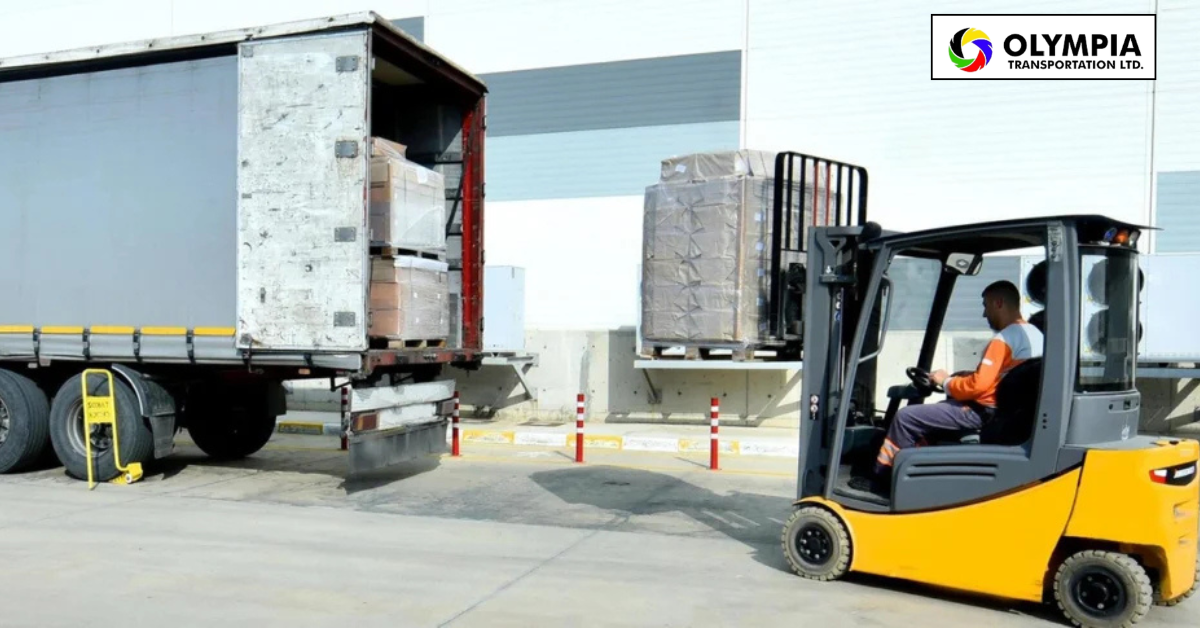
Shipping through Vancouver is rarely linear. Cargo arrives early, late, in surges, or all at once. Rail slots tighten. Terminals push for faster turns. Truck capacity fluctuates by the week. In that environment, rigid logistics models break down quickly. Transloading exists because they have to. At scale, and at a port like Vancouver, transloading in shipping is not an optimization tactic. It is how freight keeps moving at all.
We see this daily at Olympia Transportation. When containers need to clear the terminal fast, when inland destinations shift mid-journey, when rail and truck plans no longer align, transloading is what keeps momentum intact.
Vancouver Is Built for Volume, Not Delay
The Port of Vancouver handles enormous throughput, and it does so under constant pressure. Limited terminal space, tight vessel schedules, and strict dwell expectations leave little margin for indecision. Freight that lingers costs money and strains relationships across the supply chain.
Transloading allows cargo to exit the port environment quickly and enter facilities designed for flexibility rather than congestion. By moving freight off-dock and reconfiguring it closer to its next mode of transport, shippers gain time, options, and control. In practical terms, transloading in shipping reduces exposure to demurrage, missed rail windows, and last-minute trucking scrambles.
Flexibility Matters More Than Perfection
No shipment arrives exactly as planned. Destinations change. Orders split. Demand softens in one region and spikes in another. When cargo is locked into a single container and a single route, those adjustments are expensive.
Transloading introduces choice back into the equation. Freight can be consolidated, broken down, or redirected without waiting for the next vessel cycle. At Olympia Transportation, we work with importers who rely on this flexibility to manage real-world variability, not theoretical efficiency. Transloading in shipping gives shippers room to respond instead of react. They struggle because the shipping process isn’t connected. That gap is exactly where a logistics transportation company becomes essential.
Cost Control Happens Between the Modes
Ocean containers are excellent for crossing water. They are not always the most efficient option inland. Rail prefers different configurations. Trucks certainly do. Transloading allows shippers to match freight to the mode that actually makes sense for the next leg.
In Vancouver, that often means shifting cargo from international containers into domestic trailers or railcars built for long-haul inland movement. The savings are not abstract. They show up in lower per-unit costs, fewer handling penalties, and more predictable delivery timelines. Used correctly, transloading in shipping is a financial discipline as much as a logistical one.
Oversized Cargo Leaves No Room for Guesswork
Not all freight fits neatly inside a standard box. Machinery, industrial components, and project cargo move through Vancouver constantly, and these loads demand planning, equipment, and experience. There is little tolerance for improvisation.
Olympia Transportation handles heavy and oversized cargo as part of our transloading operations because it belongs in controlled environments, not congested terminals. Done properly, transloading in shipping reduces risk, improves safety, and keeps specialized freight on schedule instead of sidelined.
Location and Judgment Still Matter
Transloading works best when facilities are close to the port and managed by teams who understand how ports actually operate. Paper knowledge is not enough. Timing, sequencing, and judgment make the difference.
Our proximity to Vancouver’s terminals allows freight to move quickly from ship to facility, without unnecessary handling or delay. Just as important, our experience helps clients avoid common pitfalls that only become visible once cargo is already on the ground.
A Practical Approach to a Complex Port
Transloading is not a trend in Vancouver. It is a response to volume, geography, and reality. For companies moving freight through Western Canada, it provides speed where delays are costly and flexibility where rigidity fails.
If you are evaluating transloading services in vancouver bc, Olympia Transportation offers a grounded, operationally focused approach built around how the port truly functions. Reach out to Olympia Transportation to discuss how our team can support your supply chain with dependable, well-executed transloading in shipping.
Also Read: How E-Commerce Fulfillment Companies Reduce Costs
FAQ’s
What is transloading in shipping?
Transloading in shipping is the process of transferring cargo from one mode of transportation to another, such as from ocean containers to trucks or rail, to keep freight moving efficiently through ports like Vancouver.
Why is transloading important at the Port of Vancouver?
Lorem ipsum dolor sit amet, consectetur adipiscing elit. Ut elit tellus, luctus nec ullamcorper mattis, pulvinar dapibus leo.
The Port of Vancouver operates under high volume and tight terminal schedules. Transloading helps move freight off-dock quickly, reducing demurrage risk, avoiding rail delays, and improving supply chain flow.
How does transloading reduce shipping costs?
Transloading lowers costs by shifting freight from international containers into domestic trailers or railcars better suited for inland transport, improving load efficiency and reducing per-unit transportation expenses
Can oversized cargo be handled through transloading in Vancouver?
Yes. Transloading facilities near Vancouver are equipped to manage heavy,
Who should use transloading services in Vancouver BC?
Importers, exporters, and logistics managers moving freight through Western Canada benefit from transloading. It provides flexibility when shipment plans change and keeps cargo moving despite port congestion or shifting inland routes.